AI Implementation for Consumer Brands: How to Build an AI-Native Go-To-Market System
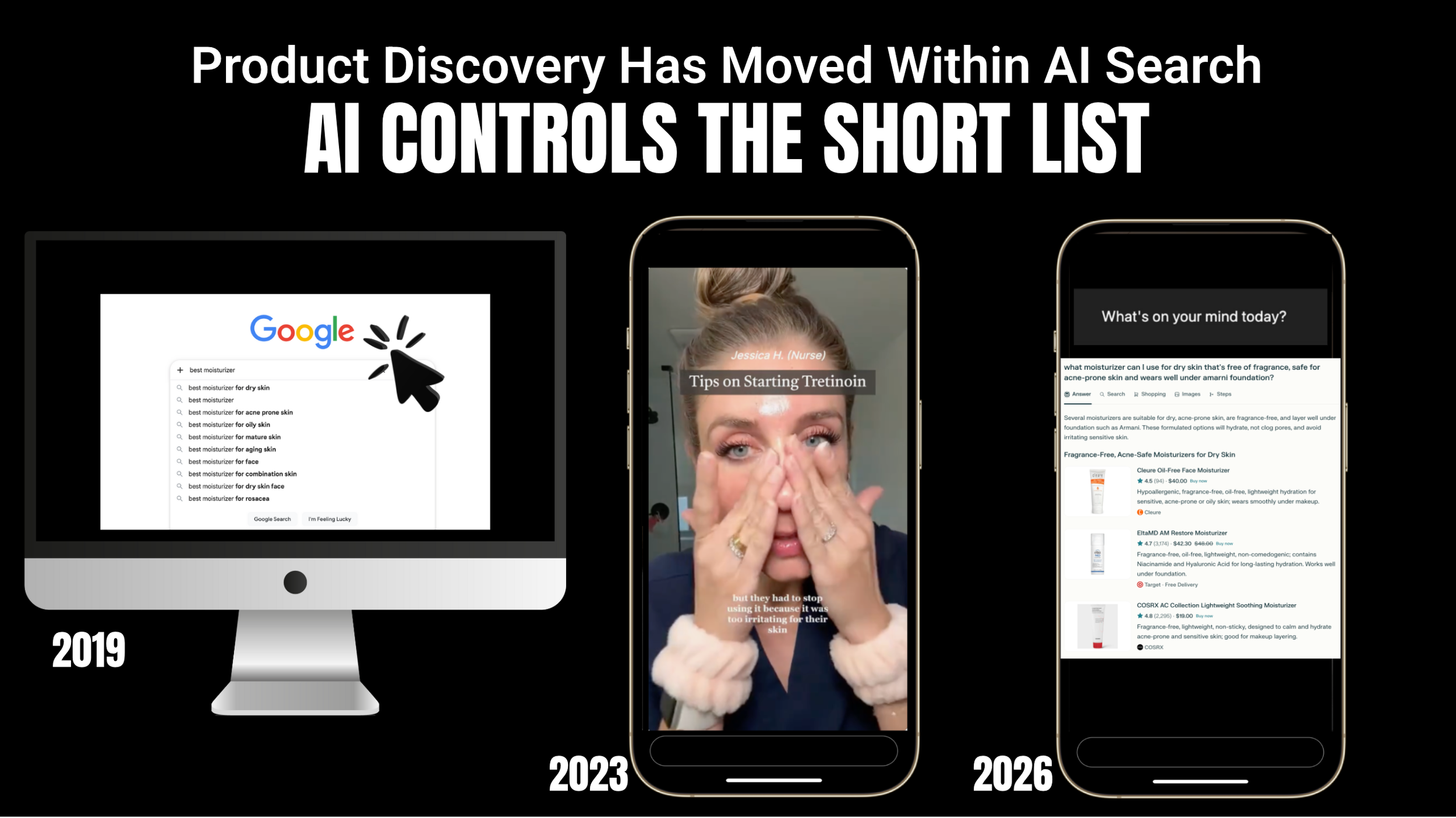
Artificial intelligence is moving fast — but most consumer brands are still using it in fragments.
A few prompts for content. Some ad variations. Maybe a chatbot experiment.
What’s missing isn’t tools.
It’s a system.
In the next decade, the brands that win won’t be the ones that use AI the most. They’ll be the ones that implement AI strategically across discovery, go-to-market, and product innovation.
This guide explains:
how consumer brands should approach AI implementation
where most teams go wrong
and how to build an AI-native go-to-market system that actually drives growth
Why AI Implementation Is the Next Competitive Advantage for Consumer Brands
In the last platform shift, Shopify changed how brands sold online.
In this one, AI is changing:
how customers discover products
how recommendations are made
how content is created and tested
how products are designed and launched
Search is giving way to AI answers. Paid media is getting more expensive. Content is becoming commoditized.
The new advantage is not speed.
It’s being chosen by AI systems before customers ever reach your site.
That requires more than experimentation. It requires intentional AI implementation across your go-to-market engine.
The Problem With How Most Brands Are Using AI Today
Most consumer brands fall into one of three traps:
1. Tool overload
Teams adopt:
ChatGPT
Midjourney
Runway
ad generation tools
But nothing connects.
2. Content without strategy
AI makes content faster — but not necessarily better.
Without structure:
brand voice drifts
claims become risky
learning loops break
3. No discovery strategy
Almost no brands are designing for:
AI search
product recommendation engines
shopping copilots
Which means competitors will get recommended first.
AI without a system becomes a cost-cutting tool — not a growth engine.
What AI Implementation for Consumer Brands Should Actually Look Like
The most effective teams treat AI as go-to-market infrastructure, not a creative shortcut.
A modern AI-native system spans four layers:
1. AI Discovery & Product Recommendation Optimization
As AI replaces traditional search, brands must design how they show up in answers and recommendations.
This includes:
AI-readable product and brand data
comparison and category content designed for LLMs
positioning and proof points AI systems trust
testing what language and attributes trigger recommendations
This is the foundation of what many teams now call AIO (AI Optimization).
2. AI Content & Creative Systems
Winning brands don’t just generate content — they build creative systems.
That means:
AI + human workflows
modular creative libraries
paid testing frameworks
creator formats designed for iteration
The goal isn’t volume.
It’s faster learning and better decisions.
3. AI Product & Innovation Strategy
AI is rapidly becoming the most powerful tool in product development.
Leading brands now use AI to:
identify white space
simulate demand
test positioning and claims
design launch narratives
This reduces risk and dramatically shortens innovation cycles.
4. AI Tech Stack & Operations
The final layer is implementation.
This includes:
selecting the right AI tools and models
integrating them into workflows
training teams
creating lightweight governance around claims, accuracy, and brand voice
This is where most brands stall — and where an experienced AI implementation partner for consumer brands becomes critical.
Why Many Brands Work With an AI Implementation Partner
AI implementation touches:
marketing
growth
product
operations
legal and claims
It’s rarely owned by one team.
An experienced partner helps brands:
design the full AI go-to-market system
avoid expensive tool mistakes
implement workflows that scale
stay current as platforms evolve
More importantly, the right partner connects AI strategy to revenue, not just experimentation.
The Future: From AI Experiments to AI Operating Systems
The brands that win this decade will treat AI the same way Shopify brands treated ecommerce infrastructure:
As a core operating layer.
Not a tool. Not a side project. A system that powers:
discovery
recommendations
content
innovation
growth
Start With an AI Go-To-Market Roadmap
If you’re a founder or growth leader asking:
How should AI fit into our go-to-market?
Where will AI drive the highest ROI?
How do we implement this without breaking brand or operations?
The best starting point is a focused AI GTM Roadmap.
Sloane is an AI implementation partner for consumer brands, designing AI-native systems across discovery, content, operations, and product innovation.
👉 Request an AI GTM Roadmap
Design how your brand gets discovered, recommended, and scaled in an AI-driven economy.