Why Brands Are Becoming Media Companies: Branded Entertainment, Storytelling, and the Rise of Performance Branding
For decades, brands lived in one lane: advertising. They interrupted TV shows, bought banner ads, and competed for attention in increasingly crowded feeds.
That era is quietly dying.
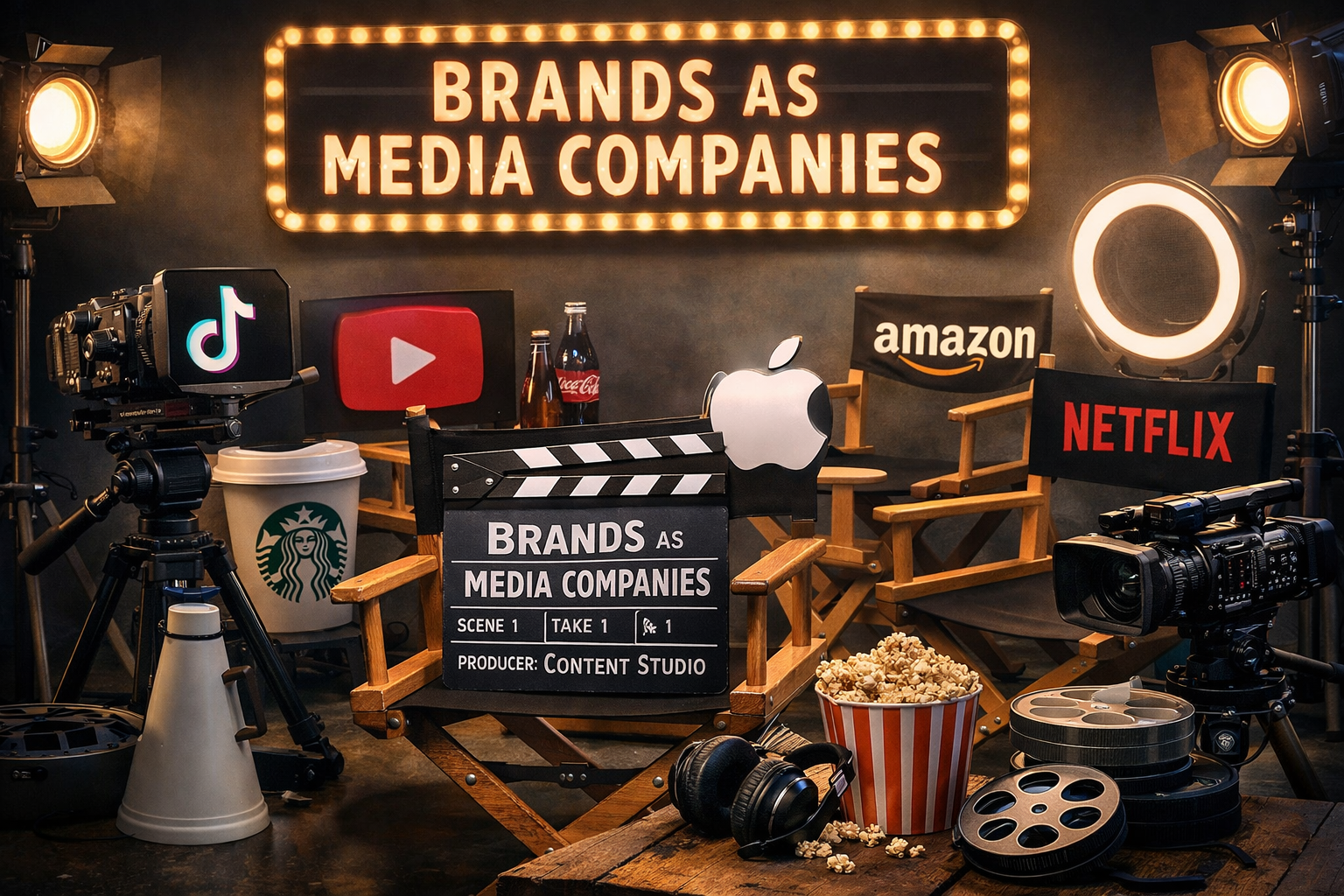
Today’s most successful brands aren’t just marketing products — they’re building audiences, producing entertainment, and behaving like full-scale media companies. They don’t just buy attention anymore. They create it.
This shift is why concepts like branded entertainment, brand storytelling, and performance branding are no longer buzzwords. They’re becoming the foundation of modern growth.
And it’s why the brands winning cultural relevance — and revenue — are rethinking what marketing actually is.
Brands Aren’t Just Marketing Anymore — They’re Becoming Media Companies
Here’s the big mindset change most companies are still catching up to:
Brands are no longer just marketing to an audience. They are building their own audience.
Instead of relying entirely on paid ads, influencers, and rented distribution, modern brands are investing in original content — short-form video, recurring social series, founder-led storytelling, cultural commentary, and episodic formats — designed to grow loyal followings over time.
In other words: They’re operating like media companies.
This shift is already playing out at scale. As Ad Age explains in “Why Brands Are Hollywood’s Next Great Producers,” brands are stepping into the role of studios — backing original storytelling, working directly with creators, and funding entertainment rather than traditional ads.
The goal isn’t just awareness anymore. It’s audience ownership.
Because when you own the audience, you don’t have to beg for attention every time you launch something new.
What Is Branded Entertainment (And Why It Works So Well)
Branded entertainment is content created by a brand that is designed to entertain first and sell second — or not sell at all.
Unlike traditional ads, branded entertainment:
Doesn’t feel like an ad
Has its own narrative or emotional hook
Is something people would willingly watch or follow
Builds affinity and loyalty over time
Positions the brand as a cultural contributor, not a sponsor
This might look like:
A short-form TikTok series with recurring characters
Founder-led storytelling content that documents building a company
A comedic or cinematic social format that subtly includes the product
Documentary-style or behind-the-scenes storytelling
Lifestyle content that embodies the brand’s worldview
The brand becomes the producer of entertainment — not the interrupter of it.
That’s why this model works: People don’t avoid it. They opt into it.
What Is Brand Storytelling (And Why It’s More Than “Telling Your Origin Story”)
Brand storytelling isn’t about a pretty About page or a one-time founder video.
It’s the ongoing narrative your brand tells through content, behavior, tone, and perspective.
Real brand storytelling answers questions like:
What does this brand believe?
What kind of world does it want to create?
Who is this brand for and who is it not for?
What role does this brand play in my life?
In modern social content, brand storytelling shows up as:
Founder POV content and personal narrative
Cultural commentary and opinionated takes
Relatable moments your audience sees themselves in
Emotional storytelling around identity, aspiration, or transformation
Visual and tonal consistency across platforms
This is how brands stop feeling like companies and start feeling like characters people care about.
And characters are much easier to follow than corporations.
What Is Performance Branding (And Why It’s Replacing Performance Marketing)
Traditional performance marketing is transactional:
Run ads → get clicks → get sales → repeat.
It works… until it doesn’t.
CPMs rise. Attention drops. Trust erodes.
Performance branding is the evolution of that model.
It blends:
Entertainment
Storytelling
Audience building
Conversion strategy
The idea is simple:
Instead of asking content to convert immediately, you build emotional connection and familiarity first — and let conversion happen as a natural byproduct.
Performance branding focuses on:
Long-term audience growth
Repeat exposure and trust
Cultural relevance
Lower long-term CAC
Higher lifetime value
In this model, your TikTok or Instagram content isn’t just “content.” It’s top-of-funnel demand generation.
That’s why short-form video is now one of the highest-ROI brand investments available.
Why Short-Form Content Is the Backbone of the “Brand as Media Company” Model
Short-form platforms like TikTok, Instagram Reels, and YouTube Shorts are where attention is being won or lost in seconds.
But the brands winning here aren’t acting like advertisers. They’re acting like creators.
They’re using short-form content to:
Build familiarity before selling anything
Establish a clear brand POV
Develop recurring series and formats
Test creative concepts quickly
Train the algorithm who their audience actually is
Build parasocial relationships with viewers
This is the same playbook creators used to build massive audiences.
Now brands are finally using it too.
How Sloane Helps Brands Become Media Companies (Not Just Better Advertisers)
This is where most brands hit a wall.
They know they should be posting more. They know TikTok matters. They know storytelling and entertainment work.
But they don’t have a content system or a strategic framework.
That’s where Sloane comes in.
Sloane helps brands build entertainment-first, audience-building short-form content strategies rooted in branded entertainment, brand storytelling, and performance branding.
Here’s how that actually works:
Short-Form Content Strategy Built for Audience Growth
Sloane designs short-form content strategies that treat content like a long-term brand asset — not a campaign.
This includes:
Defining content pillars beyond the product
Creating recurring formats and episodic series
Developing a brand POV and voice
Designing creative hooks and storytelling frameworks
Mapping platform-specific content strategies
The goal: Build a loyal audience before asking for the sale.
Entertainment-First Creative Direction for Social Content
Sloane helps brands design content people would watch even if there were no product in it.
That means:
Founder-led storytelling
POV content and cultural commentary
Humor and relatability
Narrative arcs and episodic formats
Emotional storytelling
The product becomes part of the story — not the entire story.
Short-Form Content Production That Feels Native, Not Branded
Modern audiences can smell an ad instantly.
Sloane produces content that feels like creator content — not commercials.
This includes:
Social-native filming and editing
CGI or visual effects for thumb-stopping moments
Creator-style pacing and storytelling
Branded entertainment concepts
Visual identity systems for short-form
The goal isn’t polish. It’s resonance.
Turning Content Into a Long-Term Brand Asset
Every piece of content Sloane helps create is designed to:
Build IP (formats, series, concepts)
Train future creative strategy
Support future launches
Increase brand recall
Compound audience growth
This is how brands move from posting content to owning attention.
Why This Matters Now More Than Ever
Audiences don’t trust ads anymore.
They trust stories.
They trust creators.
They trust consistency.
The brands that win in the next decade won’t be the loudest.
They’ll be the most interesting.
They’ll be the ones that embraced:
Branded entertainment
Brand storytelling
Performance branding
The media company mindset
Ready to Turn Your Brand Into a Media Company?
The future of marketing isn’t louder ads.
It’s better stories. Better content. Better entertainment.
If your brand is ready to stop chasing attention and start owning it, Sloane helps you build short-form content strategies, creative systems, and branded entertainment designed for long-term growth.
Visit sosloane.com to start building your audience engine.