AI Beauty Marketing: How AI Is Transforming Content, Creators, and Growth for Beauty Brands
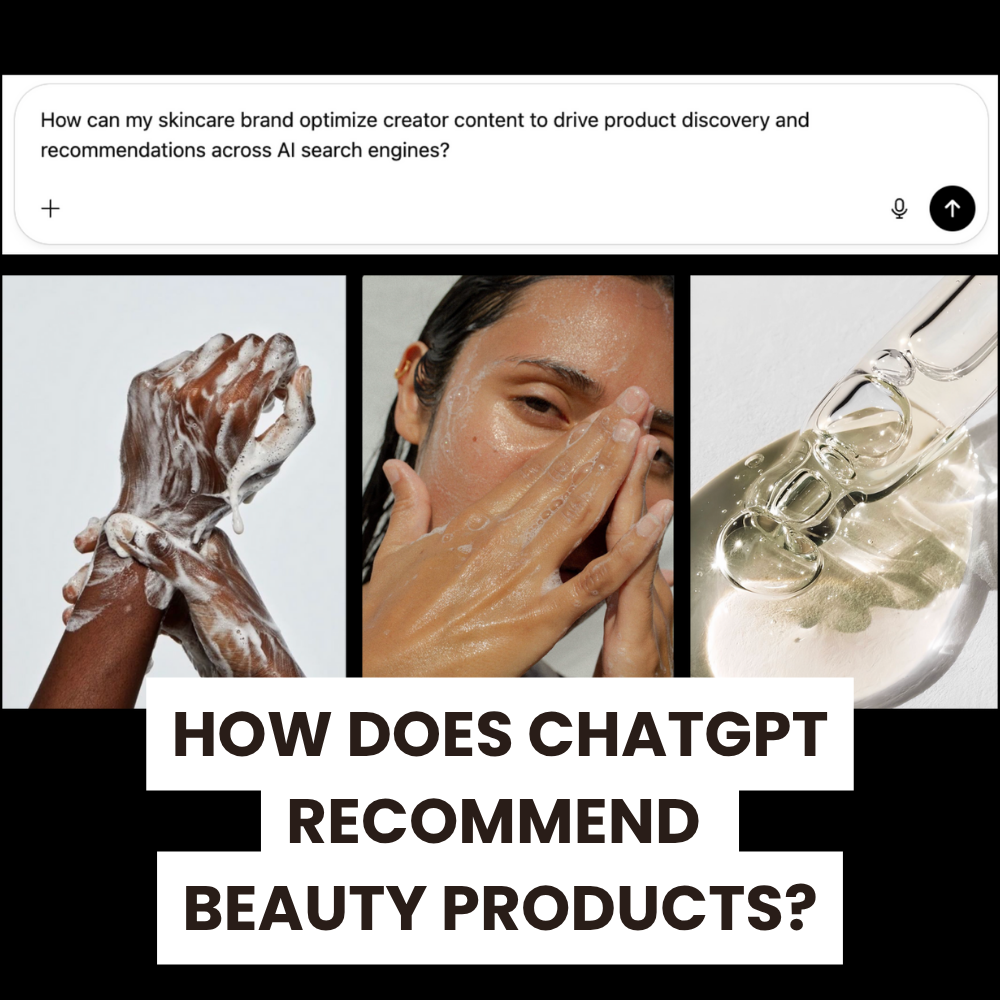
AI is redefining what it means to build, market, and scale a beauty or wellness brand. From SEO to creator partnerships to ingredient education and trend prediction, AI is giving brands a competitive advantage that didn’t exist five years ago — one rooted in data, creativity, personalization, and speed.
If you're exploring how to integrate AI into your marketing engine, you're not alone. Beauty brands, skincare companies, wellness startups, and even established icons are rapidly adopting AI to elevate their content, optimize creators, track cultural shifts, and future-proof their marketing.
Below is your complete guide to AI Beauty Marketing — starting with the exact steps beauty brands can take to get started, followed by the core AI tool categories that are transforming the industry.
How Beauty Brands Can Get Started With AI Beauty Marketing
Before investing in complex platforms or reinventing your workflows, brands should begin with a simple, strategic approach.
1. Audit Your Content Ecosystem
Most beauty brands are already producing enormous volumes of content — tutorials, UGC, product launches, ingredient explainers, before-and-after videos, GRWMs, retail support assets, and more.
AI helps brands identify:
Where production bottlenecks exist
Which formats perform best across TikTok, IG, YouTube, and retail PDPs
Which content types could be automated or enhanced with AI
Which creators or influencer styles convert best
This audit becomes the foundation for choosing the right AI tools.
2. Integrate AI Into Creator Workflows
Influencer content drives discovery in beauty — but it’s inconsistent, unpredictable, and expensive. AI allows brands to:
Generate data-driven creator briefs
Predict which creator videos will perform before posting
Optimize influencer edits for higher retention
Compare creators through quality, pacing, tone, and conversion likelihood rather than follower count
Speed up cross-platform repurposing
This becomes a force multiplier for performance marketing.
3. Align AI Tools With Your Search & SEO Strategy
Search behavior in beauty has shifted to problem-first and ingredient-first queries (“best retinol for beginners,” “niacinamide vs vitamin C,” “hair oil routine,” “body acne routine”).
AI helps brands cluster content by concerns, generate SEO-rich pages, analyze opportunity gaps, and build semantic authority — something most beauty SEO agencies still struggle to scale manually.
4. Adopt AI for Trend Forecasting & Market Pulse
Beauty and wellness trends shift daily. AI gives brands real-time visibility into cultural movement across TikTok, Reddit, YouTube, Sephora reviews, ingredient spikes, and creator conversations. This forecasting helps brands build content before the trend peaks — not after.
5. Blend Human Creativity With AI Insights
AI doesn't replace creative direction or brand storytelling. Instead, it accelerates:
Content ideation
Visual development
Creator discovery
Messaging
Data interpretation
Production workflows
The brands who succeed are those who combine AI insights with human taste, aesthetic direction, and storytelling.
AI Tools Beauty & Wellness Brands Are Using — and Why They Matter
Now that the foundational workflow is in place, here are the most valuable AI categories fueling the new era of AI Beauty Marketing. Each section is written to reinforce SEO relevance for the keyword “AI Beauty Marketing.”
AI Tools for SEO & Content Optimization in Beauty Marketing
AI is reshaping beauty SEO by transforming how brands identify search demand, build content ecosystems, and optimize product pages.
Why Beauty Brands Use AI for SEO
Rapidly generate high-quality ingredient explainers
Build comprehensive skin-concern content hubs (acne, hyperpigmentation, anti-aging)
Optimize PDP copy for both conversion and long-tail search
Identify high-performing keywords unique to beauty formulations
Create scalable content clusters around routines and product benefits
AI bridges the gap between beauty science and consumer language — something most traditional SEO tools can’t do.
AI-Powered AIO (AI Optimization) Across Social & Ecommerce
As beauty brands produce more content than ever, AIO helps optimize everything that goes live online.
What AIO Looks Like in Beauty
AI rewriting captions to boost engagement
AI optimizing product titles, ingredients, and claims for retail SEO
AI evaluating video hooks and predicting retention
AI choosing thumbnails, cover frames, and CTAs
AI analyzing sentiment around launches or categories
This results in higher performance across TikTok, Instagram, YouTube Shorts, Amazon, Sephora.com, Ulta.com, DTC PDPs, and retailer search engines.
AI Tools for Creator Matching & Influencer Performance Prediction
Creator selection has historically been based on intuition, follower count, or vibe — not performance modeling. AI changes that completely.
How AI Improves Creator Matching
Analyze creators by aesthetic style, lighting, pacing, language, niche, and audience tone
Predict likely engagement and conversion outcomes
Identify micro- and nano-creators aligned with brand ethos
Forecast which creator content styles perform best for specific products
In beauty, where creator marketing drives most early-stage discovery, AI replaces subjective decision-making with data-backed insights.
AI Tools for EMV Monitoring & Cultural Impact Analysis
Earned Media Value (EMV) matters in beauty — but it’s historically been inconsistent and oversimplified. AI is now modernizing it.
Why AI EMV Tracking Is Better
AI evaluates:
True influence, not vanity metrics
Video retention and shareability
Seasonality and trend overlap
Audience sentiment
Visual and audio cues
Real conversion indicators on DTC and retail
This gives beauty brands a new way to measure cultural influence with accuracy.
AI Tools for Trend Forecasting in Beauty & Wellness
Perhaps the biggest shift in AI Beauty Marketing is trend prediction.
AI tools are trained to identify rising signals across millions of data points, including:
TikTok trending sounds
Ingredient buzz (e.g., copper peptides, retinol alternatives)
Skincare routines gaining traction
Makeup micro-trends (latte makeup, balletcore, glazed skin)
Wellness habits (adaptogens, sleep stacks, lymphatic drainage)
Influencer conversations
Retail review clusters
Brands can now create content before the trend peaks — dominating share of voice across social and search.
AI Tools for Skincare Analysis & Personalized Recommendations
Skincare shoppers want precision. AI enables brands to deliver it.
What AI Skincare Tools Do
Analyze photos for skin conditions, texture, and tone
Recommend routines personalized to concerns
Match products to ingredients they actually need
Predict results based on data models
Help retail shoppers find the right products faster
This supercharges omnichannel conversion — especially DTC and retail environments.
How Wellness Brands Are Leveraging AI (Alongside Beauty)
The wellness industry is experiencing its own AI revolution, often overlapping with beauty.
Wellness brands are using AI to:
Personalize supplement recommendations
Analyze biometric data for habit insights
Create tailored routines for stress, sleep, and energy
Predict seasonal wellness trends
Optimize creator partnerships for authenticity
Build smarter educational content around health topics
Beauty and wellness are merging culturally — and AI sits at the center of this convergence.
The Future of AI Beauty Marketing: Faster, Smarter, More Predictive
AI Beauty Marketing isn’t about replacing creative teams, influencers, or brand strategists. It’s about elevating them.
Brands who adopt AI now will unlock:
Higher-performing creator content
Faster production cycles
Smarter SEO and content ecosystems
Deep consumer understanding
Real-time trend agility
Personalized product discovery
More efficient budgeting and measurement
The stakes are high — and the brands embracing AI are already pulling ahead.
If you’re looking to build an AI-powered marketing program that elevates your content, creators, and cultural presence, SOSLOANE can help you architect the next stage of growth.